


Sustainability and health effects of small pelagic fish

To address growing environmental and health concerns related to current food production and consumption patterns we are advised to transition to predominantly plant-based diets. While eating more plant-based whole foods is associated with better health, animal-source foods remain important sources of essential micronutrients that are not available from plants. Norway owns a plentiful resource, small pelagic fish, that is rich in these nutrients, affordable, and has a low carbon footprint. The RCN funded project Unlocking the environmental and nutritional potential of small pelagic fish: A path towards sustainable food systems explores how Norway can use its small pelagic fish catch to benefit public health in the transition towards more environmentally friendly diets.
Predominantly plant-based diets are increasingly recognized for their benefits to both human health and the environment. In many Western countries, especially among women and younger adults, plant-based and meat-reduced diets are becoming increasingly popular. While such diets offer numerous health advantages, they can also present nutritional challenges. Several essential micronutrients are either absent, present in low concentrations, or less bioavailable in plant-based foods. As a result, nutritional deficiencies are more common among vegetarians and vegans, which can have serious health consequences in both the short and long term.
Norway owns a plentiful resource, small pelagic fish, which are rich in the key nutrients often lacking in plant-based diets. These fish are also affordable and have one of the lowest carbon footprints of all animal-source foods, second only to farmed blue mussels. At the same time, Norway is the world’s leading producer of farmed salmon, a sector that relies heavily on small pelagics as a feed ingredient. Globally, 70–80% of the small pelagic catch is not used for direct human consumption. Instead, most of it is processed into fishmeal and fish oil to support the growing aquaculture industry, as well as increasing demand from the pet food and pharmaceutical sectors.
This project puts small pelagic fish into a food systems perspective and aims to provide tangible solutions for how Norway can utilize this resource to safeguard public health in the transition towards more environmentally sustainable diets, while at the same time contributing to its national goal of lowered greenhouse gas emissions, and spurring innovation towards more nutritious meat alternatives.
News

EAT-Lancet report at the Stockholm Food Forum
On October 3–4, Gabriella Ljungström attended the launch of the new EAT‑Lancet Commission Report, Healthy, Sustainable, and Just Food Systems, at the Stockholm Food Forum.
5 October 2025
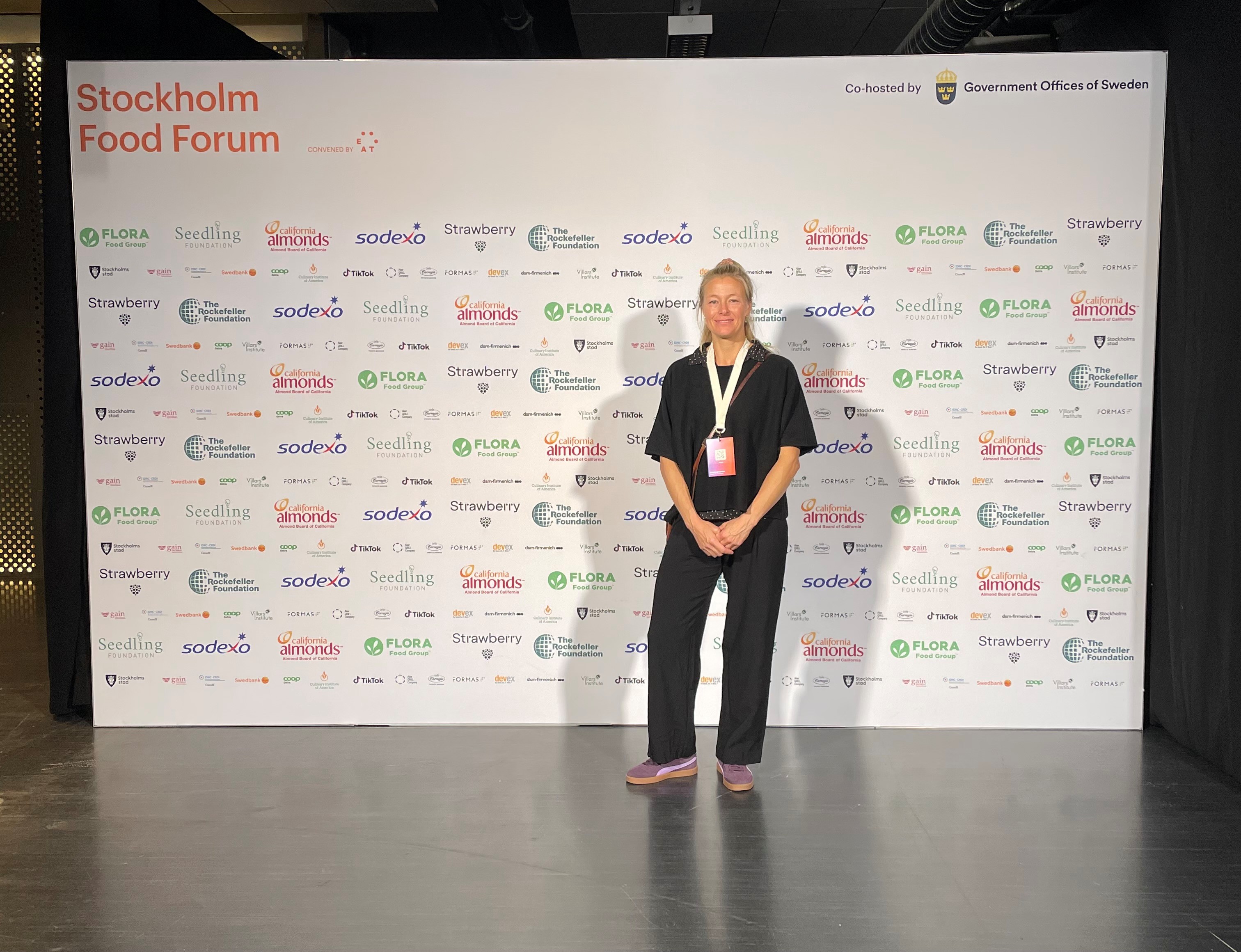
Project leader Gabriella Ljungström at the Stockholm Food Forum 2025.
The report emphasizes a largely plant-based diet while recognizing seafood as the only animal-sourced food that should increase in production due to its nutritional benefits and relatively low environmental footprint. To achieve this, it calls for rebuilding wild fisheries and scaling responsible aquaculture, highlighting well-managed fisheries as essential for sustainable food systems.
Project team
Project leader
 Gabriella Ljungström
Researcher
I am an evolutionary ecologist with an interest in global change ecology. My research has mainly focused on understanding how environmental changes, and particularly climate change, affect animals that live in seasonal environments. I also have a strong interest in sustainable use of marine resources and work on several topics relevant to the Sustainable Development Goals.
Academic partners
 Marian Kjellevold
Principal researcher at the Institute of Marine Research, Bergen, Norway
Marian Kjellevold works at the intersection of food security, nutrition, and aquatic food systems, with a particular focus on micronutrients in aquatic foods. Her research addresses how aquatic foods can contribute to global nutrition security, connecting SDG14 (Life Below Water) with SDG2 (Zero Hunger) and SDG3 (Good Health and Well-being). She collaborates internationally to explore solutions for low- and middle-income countries in Africa and Asia, ensuring that aquatic foods play a stronger role in achieving sustainable development goals.
 Angela Bravo Núñez
Researcher at the Cardiovascular and Nutrition Center (C2VN) at Aix-Marseille University, France
Angela Bravo Núñez is a food scientist specializing in micronutrient bioavailability, with extensive experience in bioavailability studies. Her work focuses on improving nutrient delivery and promoting healthier, more sustainable diets. Angela aims to bridge food technology and nutrition, creating solutions that benefit both public health and industry applications.
 Emmanuelle Reboul
Research director at the Cardiovascular and Nutrition Center (C2VN) at Aix-Marseille University, France
Emmanuelle Reboul is expert in micronutrient bioavailability and employs an integrative biology approach to explore different stages of and factors, that govern the absorption of micronutrients. She has extensive experience with bioavailability experiments and in-depth knowledge of micronutrient absorption and metabolism, as well as metabolic diseases.
Scientific advisory board
 Helle Margrete Meltzer
Norwegian Institute of Public Health, Oslo
Helle Margrete Meltzer is a highly experienced nutritionist, former Head of Research at the Norwegian Institute of Public Health, and a current member of the National Nutrition Council. Over the past decade, she has focused on the intersection of sustainability, health, and nutrition, contributing to the development of national dietary guidelines for vegetarians and vegans. She was part of the Nordic Nutrition Recommendations 2023 working group and co-authored three background papers on diet and sustainability.
 Dag L. Aksnes
Professor Emeritus
Two of my current research questions are about mesopelagic fishes and their potential role in carbon sequestration and about effects of increased terrestrial greening on marine ecosystems. I am also engaged in science advise on how to achieve more sustainable food and feed production.
Industry partners
 Pelagia AS
Norway’s largest company for landing and processing pelagic fish
Pelagia is one of the world’s largest producers and a market leader in high-quality pelagic fish products, including fish for human consumption, health supplements, fish oil, marine proteins, protein concentrates, and essential ingredients for various fish and animal feeds. Committed to sustainability through 100% fish utilization, Pelagia’s mission is to create a future where quality, innovation, and responsibility converge to deliver exceptional value to customers worldwide. Pelagia is represented by their head of innovation Jørgen Seliussen.
 Lysverket AS
Restaurant, Bergen
Lysverket is a Michelin-starred restaurant in Bergen, Norway, led by renowned chef Christopher Haatuft. Known as one of Norway’s top culinary innovators, Christopher and his team have been redefining modern Norwegian cuisine since Lysverket opened in the historic former headquarters of Bergen Lysverker. Celebrating its 10th anniversary in 2023, the restaurant earned its first Michelin star in 2021.
Collaborators
 Maria Wik Markhus
Senior scientist, Institute of Marine Research (IMR), Norway
Maria Wik Markhus is an experienced nutritionist with a focus on nutrition, food systems, and health. Her work spans nutrition, toxicology, risk assessment, and cognitive development, with recent emphasis on iodine deficiency during pregnancy and adolescence. Through a transdisciplinary approach and international collaborations, she advances understanding of how seafood supports public health and sustainable food systems.
 Quang Tri Ho
Researcher, Institute of Marine Research (IMR), Norway
Quang Tri Ho is a food scientist specializing in seafood nutrition and food safety. His research focuses on the nutrient composition of marine species, bioavailability, and the interactions between essential and hazardous elements. By generating data for risk assessment and food composition tables, his work supports public health and sustainable seafood development.
 Amund Måge
Head of Research, Seafood & Nutrition, Institute of Marine Research (IMR), Norway
Amund Måge leads the research group Seafood & Nutrition at the IMR, focusing on the nutrient composition of seafood, its bioavailability, and its role in human nutrition. His team explores new food sources and investigates how nutrients and toxic substances interact, providing data for Sjømatdata and the official Norwegian Food Table (Matvaretabellen). Previously, at the University of Bergen, Amund coordinated the university’s marine strategy, developing research infrastructure and large-scale projects in education, research, and innovation.
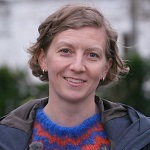 Katja Enberg
Professor
My main interest is sustainable fisheries, including the effects of fisheries on genetic and phenotypic traits as well as dynamics of the harvested populations and ecosystems. I am keen on finding sustainable solutions for using our natural resources for feeding the growing human population.
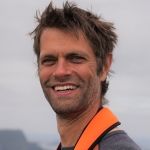 Christian Jørgensen
Professor (Group Leader)
I work with adaptation as a tool to build models that scale mechanisms at the individual level to population-level patterns and evolutionary outcomes. Topics of interest include mating systems, fishing-induced evolution, life history theory, and algorithms for modelling evolution.