

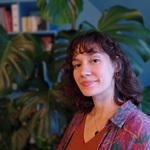
I am a marine ecologist interested in the role of micronekton in pelagic ecosystems, from the mesopelagic zone to continental shelves. My research combines field observations, trait-based ecology, and mechanistic modeling approaches to understand how organism distribution and behaviour interact with physical ocean processes to shape ecosystem dynamics.
My PhD research focused on the role of micronekton in carbon flow in the Northeast Atlantic. We developed a modelling framework to investigate the main drivers of carbon export mediated by micronekton diel vertical migrations. This work aimed to better constrain the role of actively migrating organisms in oceanic biogeochemical processes, with the influence of size, taxonomy and seasonal variations.
Carbon fluxes in the pelagic environment are strongly shaped by community structure and trophic interactions. Using combined trawl and acoustic data collected during the APERO cruise allowed to characterize functional diversity in relation with trophic partitioning in mesopelagic fishes.
Finally, field observations were coupled with the model to estimate micronekton-mediated carbon fluxes across contrasting mesoscale eddy structures, highlighting the influence of physical dynamics on biological processes in the Northeast Atlantic.
My current postdoctoral research is conducted within the DRIFT project, which investigates how advection turns ocean currents into “food conveyors”, connecting the open ocean to productive slope ecosystems. By identifying key regions around Faroese shelf, we aim to understand how current dynamics shape the community composition of drifting mesopelagic prey and influence their trophic interactions with higher trophic levels.
Office:
3G18
Thormøhlensgate 53B
3rd floor
Postal Address:
Department of Biological Sciences
University of Bergen
P.O. Box 7803
N-5020 Bergen
Norway
